
Water Level Update
Is it time to worry?

Many folks are watching the lake levels very closely this month. The water levels are predicted to peak next week, hold steady for a week or two and then begin a slow decline. Water levels on May 18 were at 247.31. by the end of May the best guess is that they may rise to at 247.38. Remember these are predictions. Wind and other short term weather events can have a strong influence on water levels. We could see a huge wet weather system get ‘blocked’ over us for a couple days for example. That’s why the forecast posted at the IJC website also includes a range of possible water levels ranging from peaking at 247.18 to a worst case 247.74, a range of about eight inches. (see graph below)
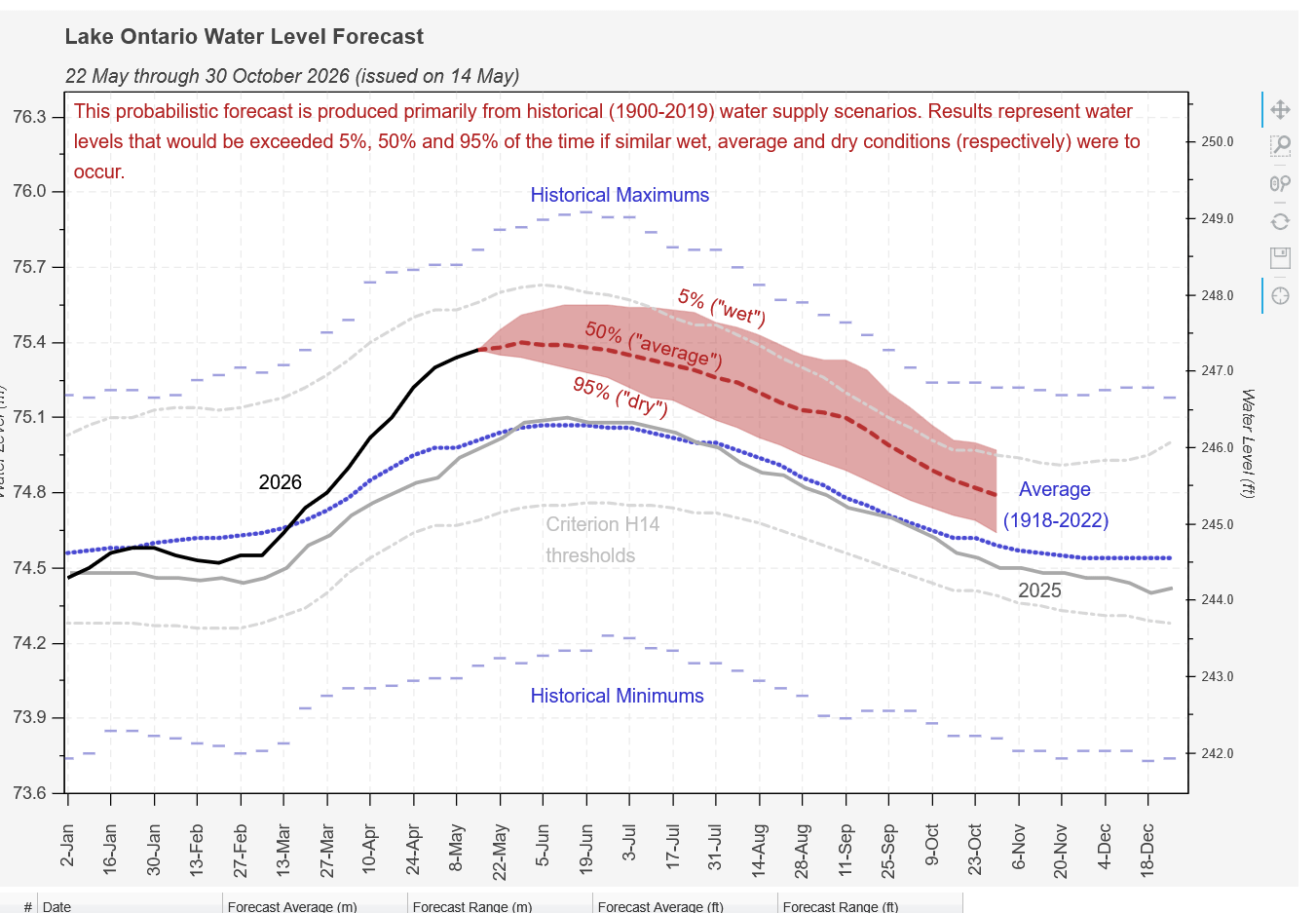
Will we reach Citerion H 14 threshold? It will be close.
A cold wet spring caused water levels in April to exceed prescribed outflows at the dam on the St. Lawrence. On April 16 the regulatory agency. the International Lake Ontario St.Lawrence River
Board, began limiting outflows to avoid flooding the Montreal area. The Ottawa River has been high this spring thanks to the heavy snow pack melting off and the ongoing wet weather. Its input if high limits the amount of water that can be released from Lake Ontario. If you want to get into the wonky policy weeds a bit as of the beginning of May the second tier of the F limit was in effect to prevent or limit flooding.
Managing the lake, a big complicated system with many sometimes conflicting social interests and many sources of water inputs, is a delicate dance of compromises. ( And apologies to Canadian readers for the mish-mash of imperial vs metric numbers.) Lake Erie’s input this year is slightly above its long term average but is below last year’s volume. Another variable, the Ottawa River as of May 19, showed that the rate of decline in water levels has been reduced by recent rainfall and continued large volumes of water flowing from the north. Water levels from Mattawa to Lake Deschenes remain near or slightly below minor flood levels. Over the next few days, water levels and flows on the river are expected to remain fairly stable before gradually declining again in all locations.
The regulators can depart from the current outflow plan for Lake Ontario if its level reaches another ‘trigger point’ that being 247.8 the (H-14 criterion). This is just above the current worst case scenario predicted for our peak this year, so with any luck we should ride this one out. The IJC site notes that the lake has reached 75.30 m (247.05 feet) or higher in 33 percent of all years since 1960. While higher than average, this water level is not unusual. In 2019, a year of record flooding, it was about two feet higher than it is now at above 249.
But these are predictions. Stay tuned.
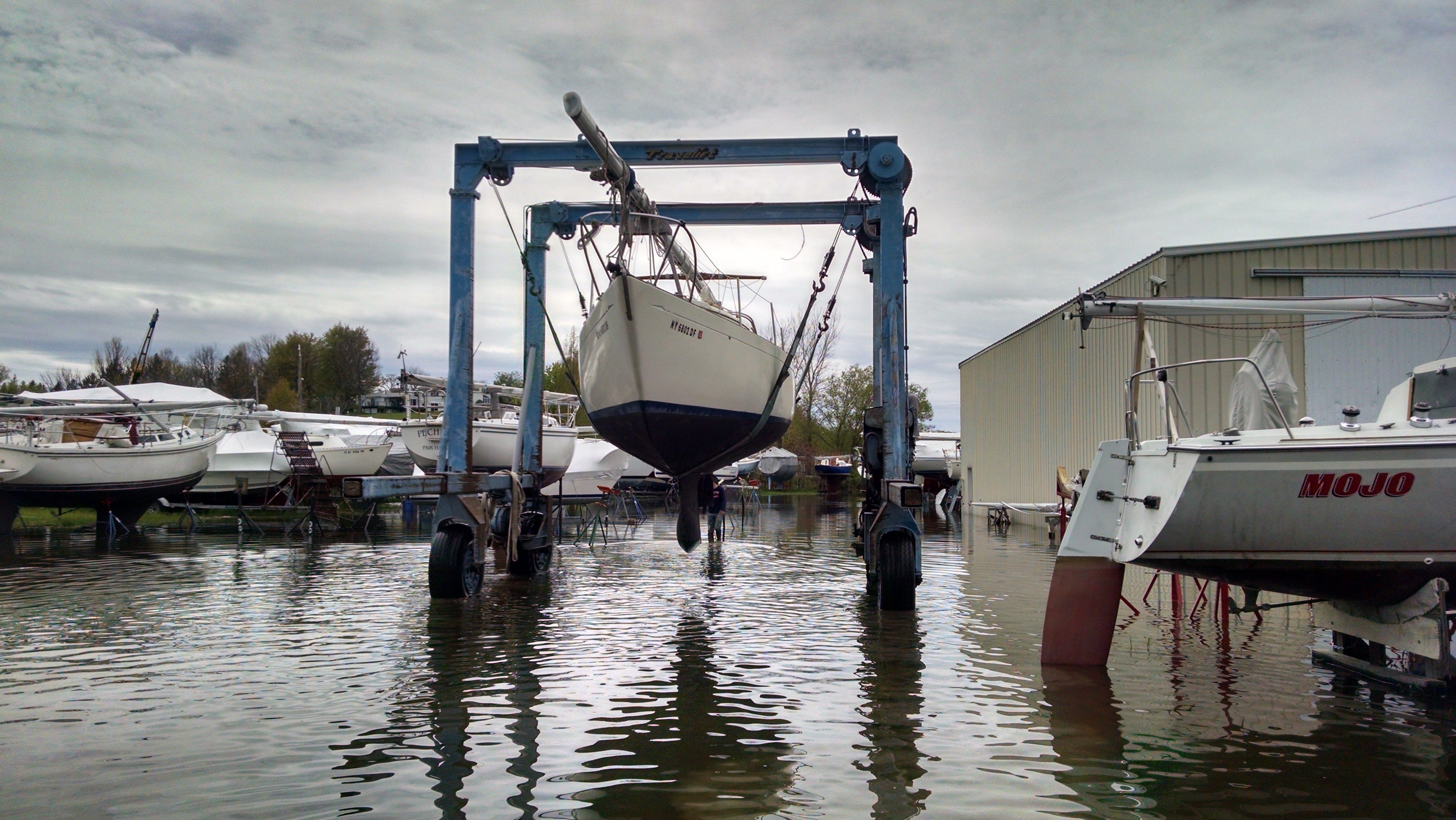
There is lots of information on line -the regulation and its historical methodology is well documented well explained and seems pretty transparent, contrary to what you might read on Facebook. There is no excuse for conspiracy theories and stupid polarizing allegations.